
Why Does My Northern Virginia Media Room Wash Out Every Afternoon?
If you have watched the sun creep across your screen in a Great Falls Colonial Revival or a Contemporary home in McLean, you already know the problem: harsh afternoon glare from western exposures disrupts daytime viewing and causes screen washout. The Northern Virginia region sits at a latitude where late-day sun angles are low and intense from spring through autumn, turning dedicated media rooms into unusable spaces between roughly 3 p.m. and sunset.
Dual shades—also called day-night shades—solve this by combining two fabric layers on one headrail. The front layer is a light-filtering sheer that softens daylight for casual television or gaming, while the rear layer is a room-darkening or blackout fabric that blocks glare entirely for cinematic immersion. You lower whichever layer your viewing situation demands, and you can even position both partially for a custom balance.
Made in the Shade Northern Virginia has helped homeowners across Ashburn, McLean, and Great Falls transform their media rooms with this versatile solution. Below, we answer the questions clients ask most often—so you can decide whether dual shades belong in your home theater upgrade.
Will Dual Shades Actually Create True Blackout?
Understanding Blackout vs. Room-Darkening Fabrics
Not every dark fabric is a true blackout. Blackout fabrics are typically constructed with multiple opaque layers or a foam backing that prevents any measurable light transmission. Room-darkening fabrics reduce light significantly—often by 95 percent or more—but can still allow a faint glow at the edges. For a dedicated home theater where you want zero light interference during HDR movie playback, you should specify a true blackout rear layer.
Side-Channel and Bottom-Seal Options
Light leakage around the shade edges is the real culprit in many installations. Dual shades can be outfitted with side channels that press the fabric against the window frame, plus a weighted bottom bar or seal that eliminates the gap at the sill. These upgrades are especially valuable in Contemporary homes with floor-to-ceiling glass, common in newer developments near One Loudoun and throughout Ashburn.
How Do Day-Night Shades Handle the Temperature Swings in Northern Virginia?
Northern Virginia summers push cooling bills higher as west-facing glass heats interior spaces. The insulating air pockets in cellular (honeycomb) dual shades slow heat transfer, which can ease the load on your Dominion Energy account during peak-rate afternoons. In winter, those same air pockets help retain warmth when nighttime temperatures drop into the twenties.
For media rooms, this thermal benefit is doubly useful: projectors and AV equipment generate heat, and every degree you keep out of the room reduces strain on your climate control. Homeowners in McLean and Great Falls often combine motorized dual shades with smart thermostats so that lowering the blackout layer also triggers a slight HVAC adjustment—keeping the room comfortable without manual intervention.
“The best home theater window treatment is invisible when you need it to be—open for natural light, sealed for movie night, and quiet enough that you never hear the motor over your surround sound.”
What Control Options Work Best for Home Theaters?
Motorization and Smart-Home Integration
Manual cord or wand operation is still available, but most Northern Virginia media-room clients opt for motorized systems. Motorized dual shades integrate with Control4, Lutron, Savant, and other automation platforms that are popular in the region’s luxury homes. You can program a single “Movie Mode” button to lower the blackout layer, dim the sconces, and power on your projector simultaneously.
Battery vs. Hardwired Power
Battery-powered motors are simpler to retrofit in finished basements or rooms where running low-voltage wire would require drywall work. Rechargeable lithium packs typically last six to twelve months between charges, depending on usage. Hardwired motors are preferable for new construction or major renovations because they eliminate battery maintenance entirely—an appealing convenience for homeowners near Tysons Corner Center who travel frequently and want set-it-and-forget-it operation.
Which Fabric Colors and Textures Suit a White Glove Luxury Aesthetic?
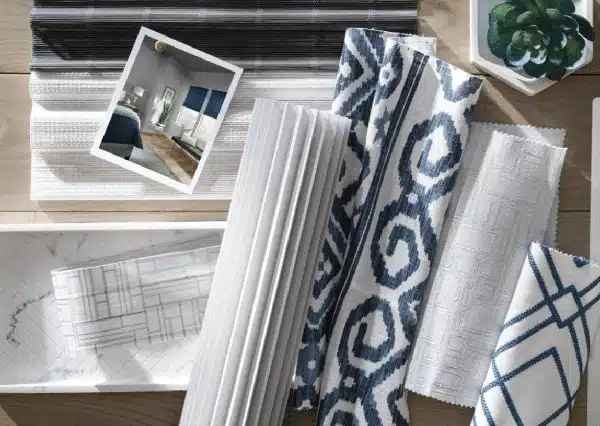
Northern Virginia’s affluent communities expect finishes that complement high-end interiors. Dual-shade manufacturers offer hundreds of fabric options, from neutral linens to textured weaves that echo the millwork in a Colonial Revival library. For home theaters, darker facing fabrics reduce internal reflections on your screen, while lighter street-facing fabrics maintain curb appeal in HOA-regulated neighborhoods.
Consider these popular pairings:
- Charcoal cellular blackout + ivory sheer: Classic contrast that disappears against dark accent walls.
- Slate woven blackout + warm gray solar sheer: Coordinates with cool-toned Contemporary interiors.
- Navy blackout + soft white linen sheer: Adds depth in Colonial Revival spaces with wood paneling.
How Much Do Dual Shades for a Home Theater Cost?
Pricing depends on window dimensions, fabric selection, motorization, and installation complexity. Below is a general range based on typical Northern Virginia media-room windows:
| Window Width | Manual Dual Shade | Motorized Dual Shade |
|---|---|---|
| 36 inches | $350–$550 | $550–$850 |
| 48 inches | $450–$700 | $700–$1,050 |
| 72 inches | $600–$950 | $950–$1,400 |
These estimates are directional; your final quote will reflect the exact specifications of your project. Made in the Shade Northern Virginia provides free in-home consultations so you can see fabric samples against your walls and receive a written proposal before committing.
What Should I Expect During Professional Measurement and Installation?
The Measurement Appointment
An experienced consultant visits your home, measures each window to the nearest eighth of an inch, and discusses mounting options—inside mount for a sleek look, outside mount for maximum light blockage. They also assess electrical access if you choose hardwired motors and note any obstacles like crown molding or recessed ceiling pockets.
Installation Day
Once your custom shades arrive, a trained installer mounts the brackets, hangs the shades, and programs any motorization. The entire process for a typical three-window media room usually takes two to three hours. You will receive a walkthrough on operating your new shades, pairing remotes, and integrating with your home-automation system.
- Pre-installation review of window conditions
- Bracket placement and leveling
- Shade hanging and tensioning
- Motor programming and limit setting
- Client training and remote pairing
Can Dual Shades Complement Other Window Treatments?
Some homeowners layer dual shades with stationary drapery panels for an added design element. In Great Falls estates with tall windows, floor-length velvet drapes flanking a motorized dual shade create a true cinema ambiance. In Contemporary Ashburn homes, minimal hardware and clean lines often look best without drapery—letting the dual shade stand alone.
If your media room connects to a living area with different window treatments, Made in the Shade Northern Virginia can coordinate fabrics and hardware finishes across the entire floor so everything feels cohesive.
Ready to Upgrade Your Northern Virginia Home Theater?
Schedule your free home theater shade consultation and experience perfect light control for movie nights and gaming sessions. Whether you live steps from Tysons Corner Center or out in the rolling hills of Great Falls, Made in the Shade Northern Virginia brings professional measurement, manufacturer-backed fabrics, and expert installation directly to your door. Call (703) 330-6487 today to book your appointment and take the first step toward a media room that performs as beautifully as it looks.
Frequently Asked Questions
Are dual shades child-safe and cordless?
Yes. Modern dual shades are available in fully cordless and motorized configurations that eliminate dangling cords. This design meets current child-safety guidelines and is the standard recommendation for homes with young children or pets.
How long does it take to receive custom dual shades after ordering?
Lead times typically range from three to five weeks, depending on the manufacturer and fabric selection. Rush options may be available for an additional fee if you have a specific deadline, such as a home theater reveal or special event.
Can dual shades be repaired if a motor fails?
Most motorized dual-shade systems use modular motors that can be replaced without removing the entire shade. A qualified installer can diagnose the issue on-site and often complete the repair within a single service visit, keeping your media room operational with minimal downtime.