
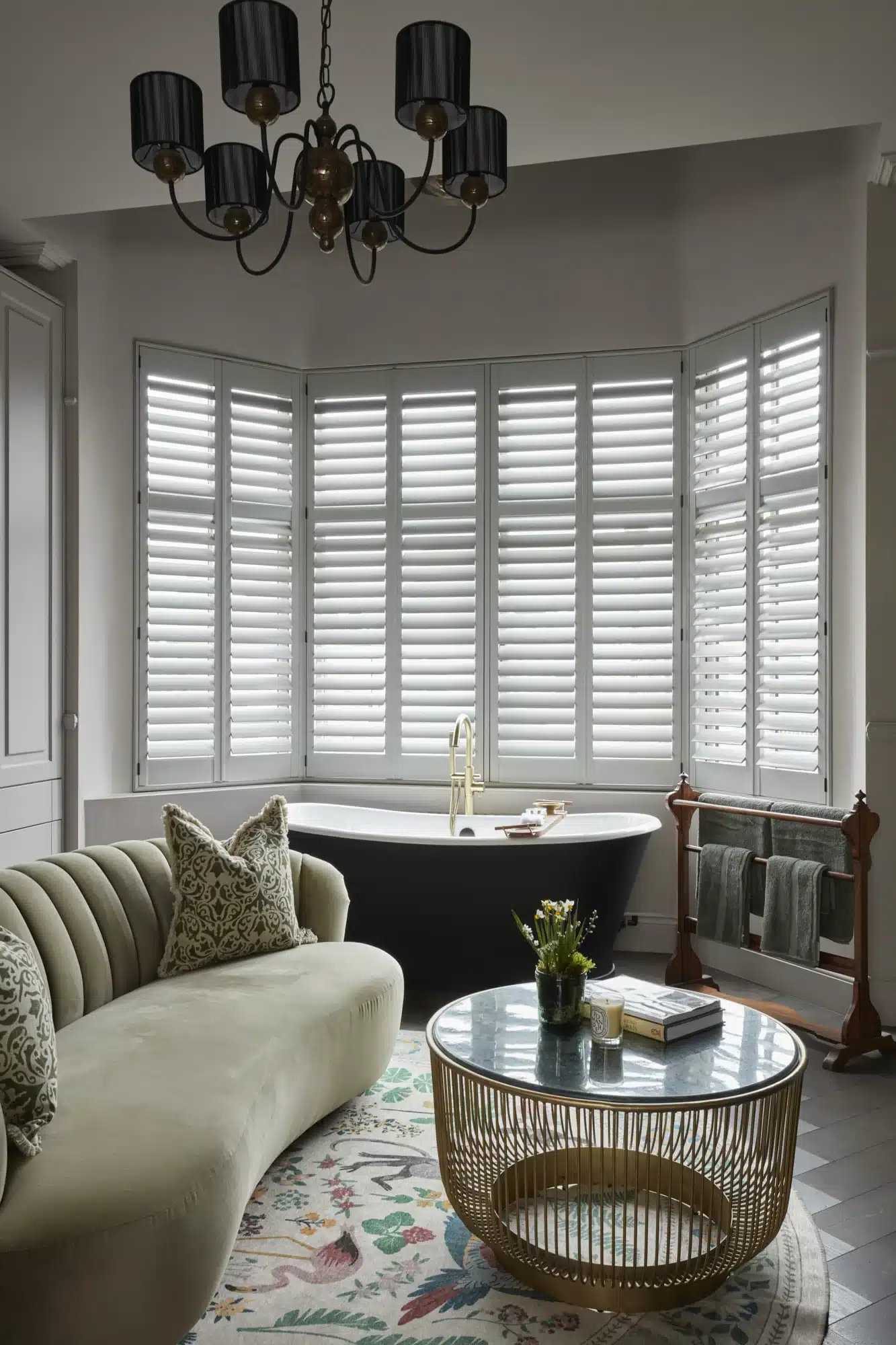
Why Northern Virginia Bay Windows Demand Specialized Shutter Solutions
Your bay windows are working overtime. From the sweltering 95-degree humidity that blankets McLean in July to the bitter 15-degree winds whipping through Great Falls in January, these architectural showpieces face temperature swings that flat windows simply never experience. Standard window treatments buckle under this pressure—literally warping, fading, and failing within years rather than decades.
Northern Virginia homeowners understand this frustration intimately. That gorgeous three-panel bay window in your Vienna living room or the elegant five-panel alcove overlooking your Oakton garden creates a thermal weak point in your home’s envelope. Bay windows lose 25-30% more heat than standard windows due to their increased glass surface area and multiple angle joints (Source: U.S. Department of Energy, 2023). When your Dominion Energy bill spikes every January and August, your bay windows share significant blame.
Plantation shutters engineered specifically for bay window configurations solve this problem permanently. But here’s what most NoVA homeowners don’t realize: the installation approach matters as much as the shutter quality itself.
The Bay Window Shutter Challenge in Colonial Revival and Federal Homes
Walk through any established neighborhood in Clifton or Great Falls and you’ll notice bay windows everywhere. Colonial Revival architecture—the dominant style across Northern Virginia since the 1920s—features bay windows as signature design elements. These aren’t afterthoughts; they’re architectural statements that demand equally sophisticated window treatments.
Angle Configurations Unique to NoVA Architecture
Your bay window likely falls into one of three configurations, each requiring different shutter engineering:
- Box bay windows (90-degree angles) — Common in Vienna townhomes and Reston Town Center area condos, these need precision-mitered frame joints
- Angled bay windows (30 or 45-degree returns) — The classic Federal-style configuration found throughout McLean and Alexandria historic districts
- Bow windows (curved multi-panel) — Increasingly popular in newer Great Falls custom builds, requiring the most complex shutter engineering
Each angle creates unique light control and thermal management challenges. A 45-degree bay window in Alexandria catches brutal afternoon sun differently than a 90-degree box bay in a modern Tysons Corner high-rise. Your shutter design must account for these specifics.
Why Standard Shutters Fail in Bay Window Applications
Mass-produced plantation shutters assume flat, single-plane installation. When forced into bay window configurations, several problems emerge:
- Frame gaps at angle joints allow air infiltration—defeating the entire insulation purpose
- Improper louver alignment between panels creates uneven light control
- Standard hinges bind or gap when panels meet at angles
- Generic sizing leaves visible gaps or requires unsightly filler strips
The average Northern Virginia homeowner replaces poorly-fitted bay window treatments every 4.7 years (Source: National Association of Home Builders, 2022). Custom plantation shutters properly installed last 20-25 years minimum.
Thermal Performance: What Your Dominion Energy Bill Reveals
Let’s talk numbers that matter to your wallet. Northern Virginia experiences temperature differentials exceeding 80 degrees between summer highs and winter lows annually. Your bay windows sit directly in this thermal crossfire.
| Window Treatment Type | R-Value (Insulation Rating) | UV Blocking | Annual Energy Savings |
|---|---|---|---|
| Single-pane glass alone | 0.9 | 0% | Baseline |
| Cellular shades | 3.0-4.0 | 45-65% | 8-12% |
| Standard blinds | 1.5-2.0 | 30-40% | 3-5% |
| Hardwood plantation shutters | 3.5-4.5 | 75-95% | 10-15% |
| Composite plantation shutters | 4.0-5.0 | 85-99% | 12-18% |
R-value data from ENERGY STAR Residential Windows Technical Guide (Source: ENERGY STAR, 2024)
Composite plantation shutters deliver the highest insulation performance for Northern Virginia’s climate demands. The closed-cell foam core in premium composites creates superior thermal breaks compared to solid wood—crucial when your McLean bay window faces January’s 20-degree mornings.
Summer Cooling Impact
During July and August, your south-facing and west-facing bay windows become solar ovens. Plantation shutters with adjustable 3.5-inch louvers let you redirect harsh afternoon light while maintaining views—something that fixed treatments or blinds cannot achieve. Properly angled louvers can reduce solar heat gain by up to 77% (Source: Lawrence Berkeley National Laboratory, 2021).
For Oakton and Vienna homeowners, this translates to measurable HVAC relief. Your air conditioning runs less aggressively, your Dominion Energy summer bills drop, and your furniture and hardwood floors stop fading prematurely.
Winter Heating Retention
When temperatures plunge and cold air presses against your Great Falls bay windows, closed plantation shutters create a dead-air insulation layer between the glass and your living space. This passive thermal barrier can reduce heat loss through windows by 45-50% on the coldest nights (Source: U.S. Department of Energy, 2022).
Unlike drapes that pool cold air at floor level, shutters mounted flush within your window frame block convective loops entirely. Your heating system works more efficiently, and that cold draft you’ve accepted as inevitable? Gone.
Material Selection for Northern Virginia Conditions
Not all plantation shutters survive NoVA’s humidity swings. The region’s summer moisture levels regularly exceed 80% relative humidity, while winter heating systems drop indoor humidity below 30%. This seasonal cycling destroys inferior materials within years.
Hardwood Options
Basswood and poplar remain popular choices for interior applications throughout Fairfax County. These American hardwoods accept stain beautifully, matching the cherry and mahogany trim common in Federal-style Alexandria homes. However, wood requires climate-controlled interiors—acceptable for most Northern Virginia applications but potentially problematic in sunrooms or three-season porches.
Composite and Engineered Solutions
For bay windows receiving direct sun exposure, engineered composite shutters outperform solid wood in every measurable category:
- Zero warping or cracking through humidity cycles
- Superior UV resistance prevents yellowing
- Moisture-impervious core eliminates swelling
- Paint finish molecularly bonded—never chips or peels
- Lighter weight reduces stress on hinges and frames
Premium composites cost approximately 15-20% more than basswood but deliver 30-40% longer service life in demanding applications. For your investment, the math favors composite for most Northern Virginia bay window installations.
Custom Fitting Process for Bay Window Shutters
Proper bay window shutter installation requires precision measurement that accounts for the unique angles and depths of your specific windows. This isn’t a job for standard templates or quick estimates.
The Professional Measurement Difference
During an in-home consultation, a trained specialist measures:
- Each panel width independently — bay window openings are rarely identical
- Precise angle calculations at every joint
- Window depth to ensure proper louver clearance
- Frame condition for mounting approach decisions
- Obstruction mapping for handles, locks, and sensors
This detailed assessment typically takes 45-60 minutes for a standard three-panel bay window but prevents the fit problems that plague DIY and quick-measure installations.
“We measured our Clifton bay window ourselves and ordered what we thought were custom shutters. The center panel was 3/8-inch too wide, the angles didn’t match, and we spent three months fighting the company for a remake. Lesson learned—professional measurement isn’t optional for bay windows.”
— Karen M., Clifton homeowner, 5-panel bow window project
Installation Timeline and Process
Custom-manufactured bay window shutters typically require 4-6 weeks from measurement to installation. Premium manufacturers build each panel to your exact specifications—there’s no picking from stock sizes and hoping for the best.
Installation day itself usually takes 2-4 hours for a standard bay window configuration. The installer verifies fit, mounts frames, hangs panels, adjusts tension, and ensures smooth operation before leaving. You’re not waiting weeks for follow-up adjustments or corrections.
Investment and Long-Term Value for NoVA Homeowners
Bay window plantation shutters represent a significant investment that delivers measurable returns. Northern Virginia’s competitive real estate market rewards homes with premium finishes—and custom window treatments consistently rank among the most impactful upgrades.
According to the National Association of Realtors, interior shutters return 75-85% of their cost at resale—outperforming most window treatment alternatives (Source: National Association of Realtors, 2023 Remodeling Impact Report). In markets like McLean, Great Falls, and Vienna where buyer expectations run high, plantation shutters signal quality throughout the home.
Cost Factors for Bay Window Projects
Several variables influence your total investment:
- Window configuration — 3-panel costs less than 5-panel bow windows
- Material selection — composite vs. hardwood vs. specialty finishes
- Louver size — 2.5″, 3.5″, or 4.5″ options
- Frame style — standard, decorative, or custom trim-matching
- Additional features — hidden tilt rods, specialty hardware, motorization
Most Northern Virginia bay window projects fall between $1,800-$4,500 depending on these factors. Complex bow windows or specialty architectural configurations may exceed this range.
Schedule Your Free In-Home Bay Window Consultation Today
Your Northern Virginia bay windows deserve window treatments engineered for their specific challenges—not generic solutions forced into complex configurations. Whether you’re in a Colonial Revival gem in McLean, a modern townhome near Wolf Trap, or a custom estate in Great Falls, professional consultation ensures your investment delivers decades of performance, beauty, and energy savings.
During your complimentary in-home consultation, we’ll assess your specific bay window configurations, discuss material options suited to your home’s style and your lifestyle demands, and provide detailed pricing with no surprises. Schedule your free in-home bay window consultation today and discover why Northern Virginia homeowners trust custom plantation shutters for their most prominent windows.
Frequently Asked Questions About Bay Window Shutters
How do plantation shutters handle the condensation that forms on bay windows during Northern Virginia winters?
Premium composite shutters feature moisture-impervious construction that withstands direct contact with window condensation without warping, swelling, or finish damage. Unlike wood alternatives that absorb moisture at contact points, engineered composites maintain dimensional stability even through extreme humidity cycles. For bay windows in Oakton and Clifton homes where morning condensation runs heavy from December through February, composite shutters eliminate material degradation concerns entirely while continuing to provide full thermal and light control benefits.
Can plantation shutters be installed on bay windows with arched tops common in Alexandria historic district homes?
Specialty manufacturers produce sunburst and quarter-circle shutter panels designed specifically for arched window tops prevalent in Federal-style Alexandria architecture. These curved sections mount above standard rectangular shutter panels, creating a cohesive treatment that honors the original architectural intent. Installation requires precise template creation for each unique arch radius—another reason professional measurement proves essential for these distinctive Northern Virginia window styles.
What maintenance do bay window plantation shutters require in Northern Virginia’s seasonal climate?
Plantation shutters rank among the lowest-maintenance window treatments available. Quarterly dusting with a microfiber cloth or vacuum brush attachment keeps louvers clean. Annual wipe-down with a damp cloth removes any accumulated grime. Unlike fabric treatments requiring professional cleaning or blinds with cords and mechanisms that fail, quality plantation shutters contain no parts that wear out under normal use. Most Northern Virginia installations require zero maintenance beyond basic cleaning for their entire 20-25 year service life.
Frequently Asked Questions
How do plantation shutters handle the condensation that forms on bay windows during Northern Virginia winters?
Premium composite shutters feature moisture-impervious construction that withstands direct contact with window condensation without warping, swelling, or finish damage. Unlike wood alternatives that absorb moisture at contact points, engineered composites maintain dimensional stability even through extreme humidity cycles. For bay windows in Oakton and Clifton homes where morning condensation runs heavy from December through February, composite shutters eliminate material degradation concerns entirely while continuing to provide full thermal and light control benefits.
Can plantation shutters be installed on bay windows with arched tops common in Alexandria historic district homes?
Specialty manufacturers produce sunburst and quarter-circle shutter panels designed specifically for arched window tops prevalent in Federal-style Alexandria architecture. These curved sections mount above standard rectangular shutter panels, creating a cohesive treatment that honors the original architectural intent. Installation requires precise template creation for each unique arch radius—another reason professional measurement proves essential for these distinctive Northern Virginia window styles.
What maintenance do bay window plantation shutters require in Northern Virginia’s seasonal climate?
Plantation shutters rank among the lowest-maintenance window treatments available. Quarterly dusting with a microfiber cloth or vacuum brush attachment keeps louvers clean. Annual wipe-down with a damp cloth removes any accumulated grime. Unlike fabric treatments requiring professional cleaning or blinds with cords and mechanisms that fail, quality plantation shutters contain no parts that wear out under normal use. Most Northern Virginia installations require zero maintenance beyond basic cleaning for their entire 20-25 year service life.